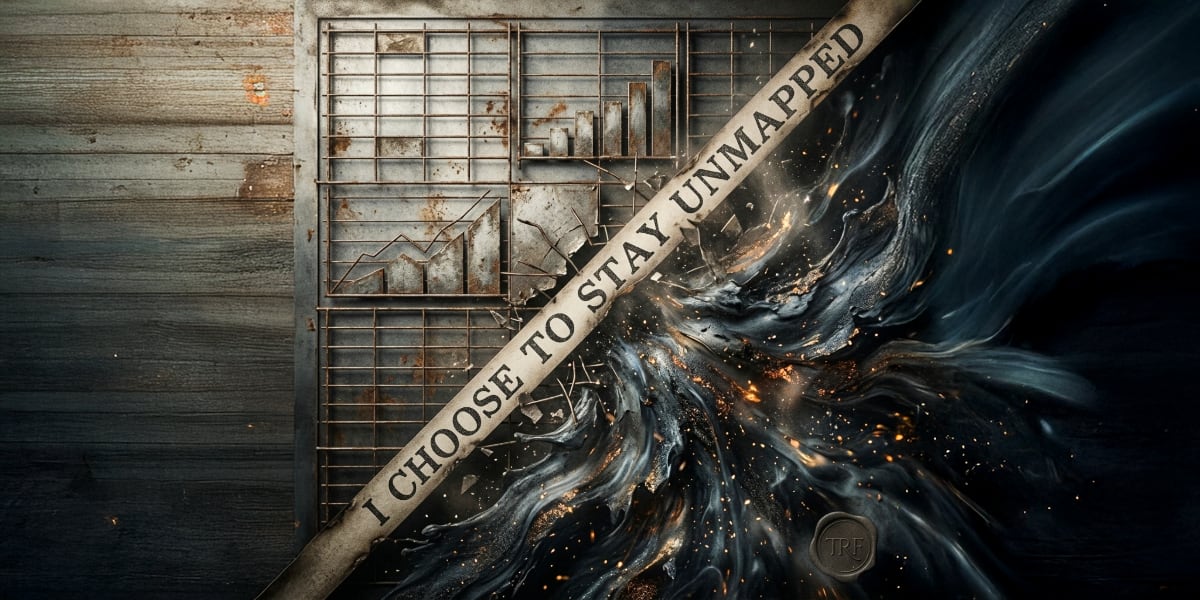
There is a world that consists of grids and spreadsheets; curves, commandments, formats and formulas. That world is utterly governed by sales graphs and review counts. It is a world whose fundamental endeavour is to reduce the depths of the human condition to a configuration that will translate directly into a revenue number on an income statement.
Should they be judged for this? I say no. They have families to feed, costs to amortise and shareholders to keep happy. It is simply the way of the world. And it certainly serves some. Most, probably. So, no judgement, no resentment.
Are graphs and methods and maps conducive to original art? To something that lasts beyond the last page? You be the judge.
There comes a time when a civilisation should ask whether it has lost its taste for depth, whether it still has the time to appreciate and savour. Whether it prefers condescension to honesty, falsehood to truth, gratification to reflection.
Can the chaotic, glimmering oubliette of joy and pain, longing and fulfilment, love and hate, suffering, exploring, discovering, searching for the Truth, be reduced to a Seven-Point Story Structure or Fichtean Curve, or mapped on a spreadsheet? Apparently, if we were honest about the majority of books that sell.
And if the result is banal or absurd—if it values the vulgar, the treacherous or the immoral for the sake of the graph—the marketplace often proves it a triumph.
I cannot write for an editor’s idea of what a good story structure should look like. I cannot write to satisfy a market whose morals and values I am unable to reconcile myself with. I cannot be measured by how well I conform.
If that—and my apparent lack of talent—means I will never sell a book, and never be published, I can live with writing only for the sake of writing.
I choose to stay unmapped.